AI-powered bioprocess optimization
Every experiment moves you forward.
BioOptima AI tells your team exactly what to run next — then learns from every result to converge on scalable process conditions in weeks, not months. Even without prior data.
Start with the data you have. Or start with none.
Your team runs experiments in your lab, using your equipment. BioOptima learns from the results and recommends what to test next.
No historical dataset required
BioOptima can begin without years of prior experimental data.
Experiments run in your lab
Your scientists stay in control of the experimental workflow.
Your data remains yours
Customer data and results remain customer-owned.
How it works
A closed loop that gets smarter every cycle.
Each experiment compounds — making the next one faster, cheaper, and more accurate. Even if you start with zero data.
Ingest
Prior data, heuristics, or none at all
Design
AI designs the next highest-value experimental cycle
Run
Log results in your existing lab, no integration
Learn
Model updates and the design space narrows
What BioOptima helps you decide
What biology should we use?
Cell Factory Intelligence
- Strain or cell selection
- Media composition
- Expression conditions
- Biological design space
How should we run it?
Process Intelligence
- Process conditions
- Feeding strategies
- Induction parameters
- Process parameter optimisation
How do we make it scale?
Scale Intelligence
- Scale translation
- Oxygen-aware design
- Engineering constraints
- Scale-up recommendations
A different way to navigate biological development
| Traditional DOE | Simulation-first tools | BioOptima AI | |
|---|---|---|---|
| How experiments are selected | Fixed matrix, set upfront. | Generated from a calibrated model. | Selected each cycle based on prior learning. |
| Adapts as results come in | No — set before the first run. | Requires recalibration per dataset. | Yes — each result informs the next. |
| Dependence on prior data | Needs an expert-designed matrix. | Needs a prior dataset. | Works with zero prior data. |
| How results are incorporated | Analysed together, at the end. | Feeds back into the simulation. | Incorporated after every run. |
| How the next experiment is chosen | Pulled from the fixed matrix. | Proposed from simulation output. | Chosen to maximize learning. |
How experiments are selected
Traditional DOE
Fixed matrix, set upfront.
Simulation-first
Generated from a calibrated model.
BioOptima AI
Selected each cycle based on prior learning.
Adapts as results come in
Traditional DOE
No — set before the first run.
Simulation-first
Requires recalibration per dataset.
BioOptima AI
Yes — each result informs the next.
Dependence on prior data
Traditional DOE
Needs an expert-designed matrix.
Simulation-first
Needs a prior dataset.
BioOptima AI
Works with zero prior data.
How results are incorporated
Traditional DOE
Analysed together, at the end.
Simulation-first
Feeds back into the simulation.
BioOptima AI
Incorporated after every run.
How the next experiment is chosen
Traditional DOE
Pulled from the fixed matrix.
Simulation-first
Proposed from simulation output.
BioOptima AI
Chosen to maximize learning.
Proof point
Real results. Real programs.
Problem: 8–12 months of static DOE screening couldn't stabilize fed-batch conditions under oxygen variability.
Result: Converged in 3 adaptive cycles — 6× productivity gain and a transferable operating window defined for scale-up.
Read full case study →Problem: Every new strain triggered a full design-space re-exploration, with no knowledge carried forward between programs.
Result: Learned interaction patterns applied across constructs — 3× productivity and quality improvement with reduced exploratory burden on every follow-on program.
Read full case study →The people behind Bioforge.
Bioprocess science, applied AI, and production software — built by people who’ve worked at scale.
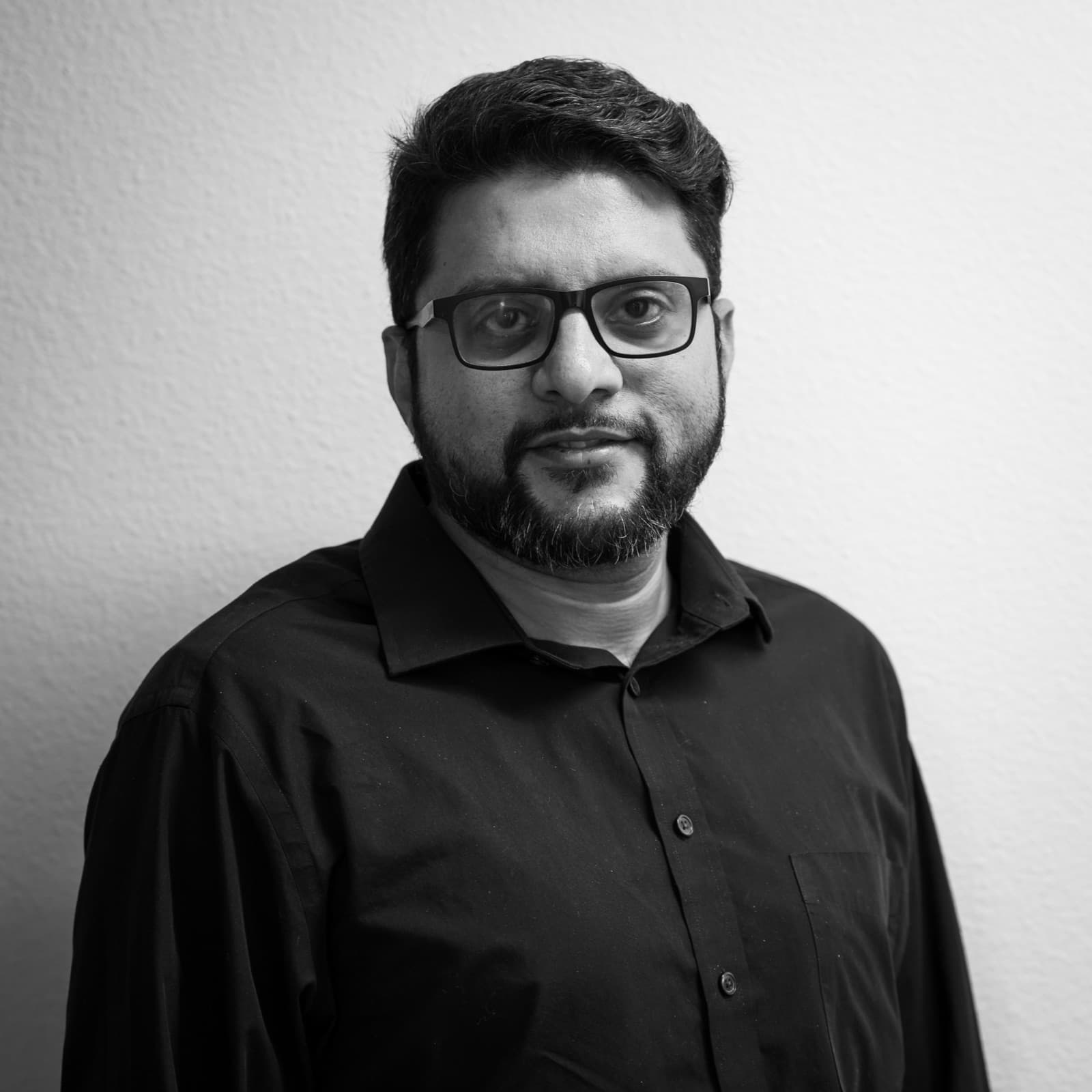
Keerthi Prasad Venkataramanan, PhD
CEO
15+ years taking biology from experiment to manufacturing scale.
PhD Biotechnology · UAH/Absci · DSM · Novozymes
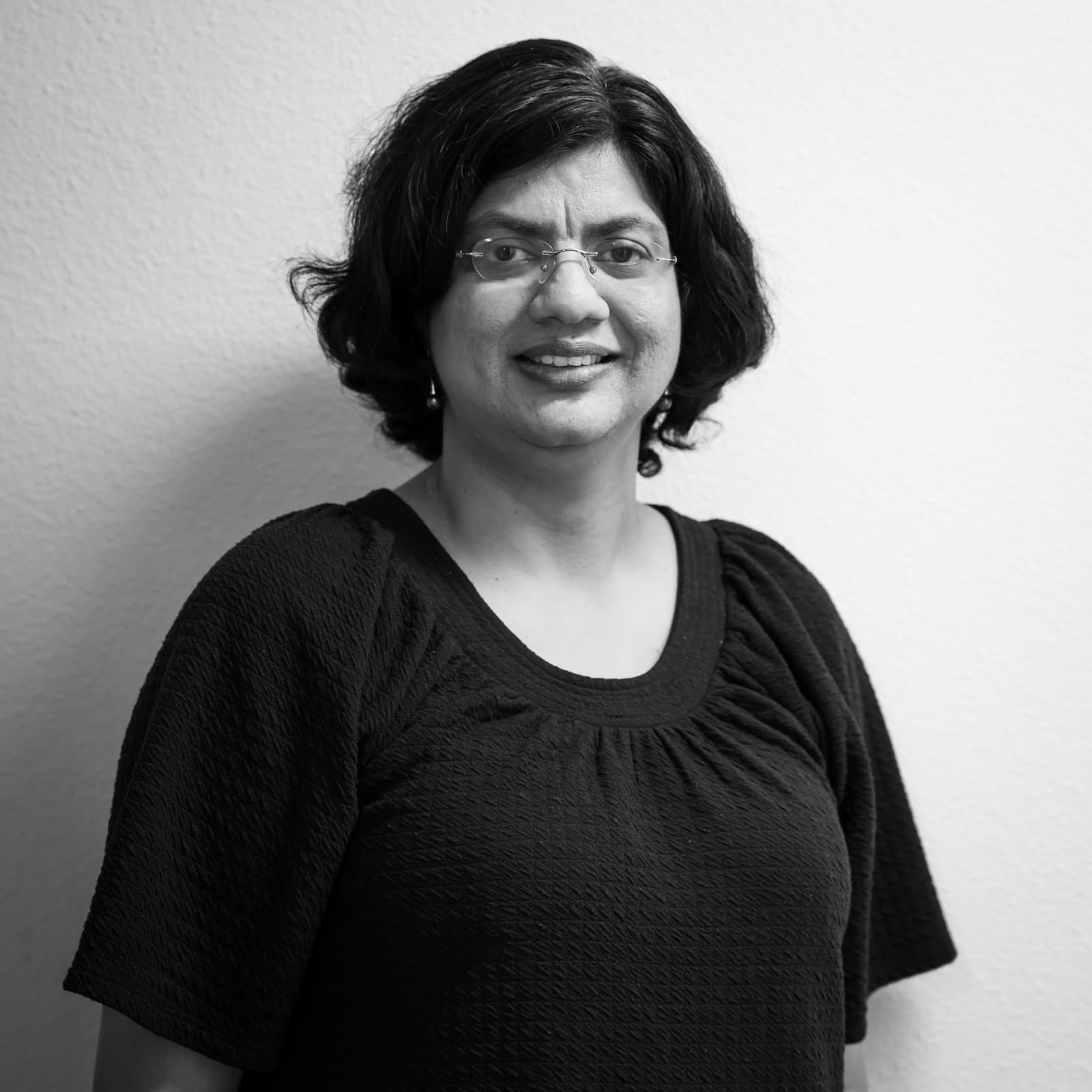
Dharini Govindarajan
COO
Builds the intelligence that turns experiments into decisions.
MBA Duke Fuqua · MS Computer Science (AI/ML)/Amazon · Nike · Capital One
Pilot collaboration framework
Start with a 4-week demonstration.
AI-guided experimental design across 2–3 adaptive cycles — no new equipment, no IT project, no commitment beyond the pilot.
Book a Demo